
Liz Diller & Ric Scofidio: Architect Provocateurs [ASL]
Special | 52m 50sVideo has Closed Captions
Learn how architects Liz Diller and Ric Scofidio changed cityscapes around the world. ASL Version.
Learn how Liz Diller and Ric Scofidio became two of the most notable architects of their generation. Their studio, DS+R, reshaped how cityscapes, from New York to LA and London to Doha, can define public life and culture. Today, Diller continues to influence the designs of buildings and public spaces around the world as an architect and scholar. This version contains on-screen ASL interpretation.
Problems playing video? | Closed Captioning Feedback
Problems playing video? | Closed Captioning Feedback
Support for American Masters is provided by AARP, The Rosalind P. Walter Foundation, Thea Petschek Iervolino Foundation, Burton P. and Judith B. Resnick Foundation, The Philip and Janice Levin Foundation,...
Support provided by:

Liz Diller & Ric Scofidio: Architect Provocateurs [ASL]
Special | 52m 50sVideo has Closed Captions
Learn how Liz Diller and Ric Scofidio became two of the most notable architects of their generation. Their studio, DS+R, reshaped how cityscapes, from New York to LA and London to Doha, can define public life and culture. Today, Diller continues to influence the designs of buildings and public spaces around the world as an architect and scholar. This version contains on-screen ASL interpretation.
Problems playing video? | Closed Captioning Feedback
Where to Watch American Masters
American Masters is available to stream on pbs.org and the PBS app.
Buy Now
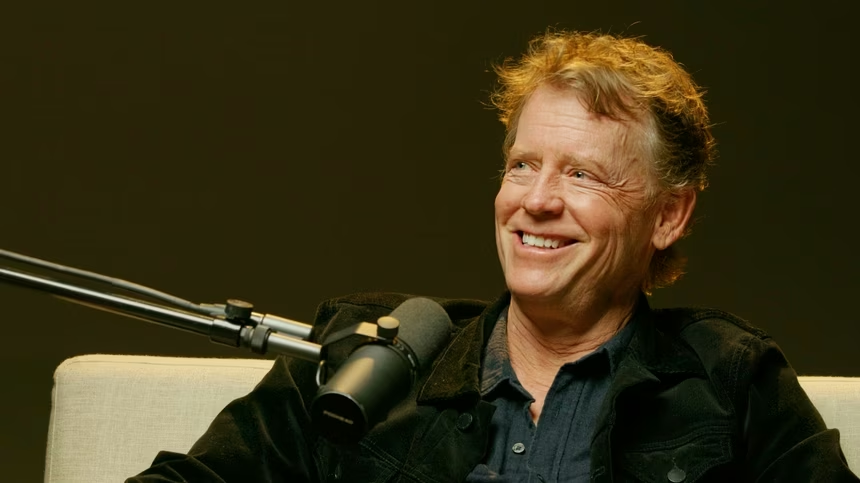
A front row seat to the creative process
How do today’s masters create their art? Each episode an artist reveals how they brought their creative work to life. Hear from artists across disciplines, like comedian Chris Fleming, actor Greg Kinnear, sports journalist Taylor Rooks, and more on our video podcast "American Masters: Creative Spark."Providing Support for PBS.org
Learn Moreabout PBS online sponsorshipMore from This Collection
These episodes of American Masters feature enhanced accessibility, including extended audio description, on-screen ASL interpretation and large open captions.
 New
Liz Diller & Ric Scofidio: Architect Provocateurs [EAD]
Learn how architects Liz Diller and Ric Scofidio changed cityscapes around the world. [Contains EAD] (57m 5s)
American Pachuco: The Legend of Luis Valdez (EAD)
Discover filmmaker and playwright Luis Valdez, a founding figure of the Chicano Movement. (1h 33m 51s)
American Pachuco: The Legend of Luis Valdez (ASL)
Video has Closed Captions
Discover filmmaker and playwright Luis Valdez, a founding figure of the Chicano Movement. (1h 31m)
Mary Oliver: Saved by the Beauty of the World [EAD]
This version contains EAD. Celebrate the life and career of Pulitzer Prize-winning poet Mary Oliver. (1h 26m 4s)
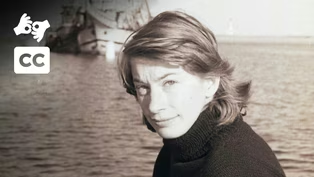
Mary Oliver: Saved by the Beauty of the World [ASL]
Video has Closed Captions
This version contains ASL. Celebrate the life and career of Pulitzer Prize-winning poet Mary Oliver. (1h 22m 55s)
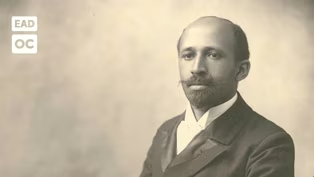
W.E.B. Du Bois: Rebel With a Cause [EAD]
This version contains EAD. Explore the life of notable Black scholar W.E.B. Du Bois. (1h 59m 2s)
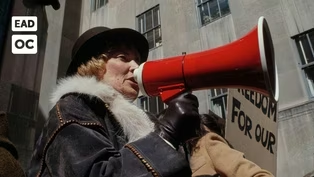
Bella! This Woman's Place Is in the House [EAD]
Follow the rise of politician and activist Bella Abzug. This contains Extended Audio Description. (1h 45m 25s)
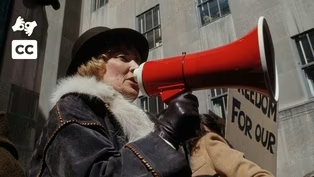
Bella! This Woman's Place Is in the House [ASL]
Video has Closed Captions
Follow the rise of politician and activist Bella Abzug. This contains on-screen ASL interpretation. (1h 40m 13s)
Sun Ra: Do The Impossible [EAD]
Discover the extraordinary life of poet, philosopher and music visionary Sun Ra. (1h 30m 36s)
Sun Ra: Do The Impossible [ASL]
Video has Closed Captions
Discover the extraordinary life of poet, philosopher and music visionary Sun Ra. ASL version. (1h 23m 5s)
Elie Wiesel: Soul on Fire [ASL]
Video has Closed Captions
Learn about Elie Wiesel, Holocaust survivor and Nobel Peace Prize-winning author of Night. (1h 24m 5s)
Elie Wiesel: Soul on Fire [EAD]
Learn about Elie Wiesel, Holocaust survivor and Nobel Peace Prize-winning author of Night. (1h 28m 10s)
Providing Support for PBS.org
Learn Moreabout PBS online sponsorship♪♪ ♪♪ ♪♪ -When we started the High Line, we thought maybe 300,000 people would come annually.
We never imagined that, in 2016, over seven and a half million people visited the High Line.
[ Children shouting indistinctly ] -Liz Diller, co-founder of Diller Scofidio + Renfro, is behind some of the world's most iconic building projects.
-She is the leading female architect in the United States.
-I feel like we touched a nerve, a global nerve.
Right from the start, I was going to be an artist.
Ric was already an architect.
Our studio was always this cross between art and architecture.
-At the beginning, they certainly weren't making buildings.
They were making art pieces.
-The fact that they could pull off that [bleep] damn Blur Building is extraordinary.
It's a giant machine that made a huge impact.
It's just a huge [bleep] statement.
-Little by little, Diller Scofidio + Renfro progressively became the go-to architects for cultural projects.
-But when they hire Liz and Ric to do work on the Museum of Modern Art, there's this explosion in the architecture world.
-I don't think I've ever lived through anything like that.
-There could have been no Liz without Ric, and there could have been no Ric without Liz.
-I don't think I could do that again.
-Liz was the sail.
Ric was the keel.
[ Camera shutters clicking ] ♪♪ ♪♪ -Good morning.
I want to welcome you on behalf of the Institute of Contemporary Arts Board of Trustees, the Architecture Selection Committee, and four internationally esteemed architecture firms presenting here today.
These presentations mark a significant milestone as our art museum moves toward the opening of an expanded and enhanced ICA at Fan Pier in downtown Boston.
-We had been interviewed by the selection committee some weeks before the public presentation.
The fact that we had not done a museum before I think really stood in the way, and it made some of the board members a bit nervous.
-As part of our architect selection process, after we brought it down to a short list, we organized a day in which the architects could present their design philosophies and approaches to the public.
And we had about 750 people who filled a hall on a Saturday morning.
[ Indistinct conversations ] -We had understood that the selection had already been made and this was kind of a gesture to the public to allow them to get a little bit of a sense of the process, but we never, ever believed that the presentation would have any effect on the outcome.
So we f-- We actually -- -But that was your -- that was your feeling that the selection had been made, although we had no evidence of that.
-We were certain it was a Zumthor job.
[ Chuckles ] -It is with great pleasure that I present Peter Zumthor.
[ Cheers and applause ] -In the field of the four architects, Peter Zumthor was by far the most established architect, the most well known in architectural circles, and certainly the most accomplished in terms of the number of projects.
-I think you have to go there and look at the buildings.
-I had no doubt that Zumthor was gonna win it.
-And now Liz Diller and Ric Scofidio.
[ Applause ] -Elizabeth has done an enormous number of public lectures about our work.
She's very comfortable and very articulate in presenting our thoughts on stage.
I tend to want to kind of run off stage as fast as possible and hide in the background.
-We'd like to, first of all, thank the ICA for giving us this opportunity.
-There was a little hesitation about them, in part just because of their public persona.
They're sort of insufferably cool.
You know, they're very New York.
They're very art-world performance art.
I think that gave people in Boston, you know, Lilly Pulitzer people in Boston, a little bit of a start.
-Oh, yes.
Can we dim the lights?
-She is all controlling.
She's a micromanager, and it's because she is absolutely concerned about every detail.
He is an amazing technician, an amazing craftsman.
So, the combination of Ric's sort of technical abilities with Liz's, you know, control is a force to be reckoned with.
-Over the past 20 years, our practice has been dedicated to cracking open the discipline of architecture.
Our work takes many forms.
It's always driven by ideas, not by professional norms.
Architecture must constantly be in the process of rethinking conventions -- that is, spatial conventions, material conventions, and programmatic conventions.
And this is tested with every project we do.
-That Diller and Scofidio got on this short list had everybody's jaws drop.
I mean, they just couldn't believe it.
And they have a lot of interesting things to say, but they had not built anything.
And I knew privately, from having spoken to them, they were desperate for the job.
They really, really wanted it.
-Thank you.
[ Applause ] -You go through so many things like that in your life, where you hope that something will come your way or a commission will occur.
And you walk that edge, and you can drive yourself crazy.
-I thought we deeply deserved it... -[ Chuckles ] -...but, um, it probably wasn't ours to have.
So I did put it out of my mind.
[ Applause ] -I think we both felt that a museum would be a great challenge because it would synthesize where we'd spent the last 20 years of our lives working.
[ Siren wailing ] [ Horn honks ] -So, we're going back, Ric.
-Yes.
-Going back in time.
-Back in time.
Okay.
I remember I got into an elevator, and there was a student.
You probably re-- -Dan Cowler.
-Dan Cowler, who was a student my second year.
And there was this lady, who turned out to be Liz, who was in the same elevator, but I really didn't pay much attention to her.
-Well, I was dating Dan, and that's the first time I saw Ric, and this guy with a big beard and wearing a safari jacket and I thought, "Oh, weird guy."
And Dan introduced us, and then when Ric left the elevator, Dan, who was a bad boy... -Yes.
-...said, "You and him, you're gonna -- you're gonna wind up being together."
I have no idea where that came from, why he said that.
You know, maybe it stuck with me or something.
[ Up-tempo music plays ] [ Horn honks ] ♪♪ High school is when everything opened up to me.
I don't remember much except smoking dope and joining protests.
-♪ Born to be wild ♪ -My mother always told me to have a career, go to school, and to be free of men.
I mean, this was basically drilled into my head -- "Be free of men."
But there was also the art side.
I remember dodging school often and going to the Museum of Modern Art.
I spent a lot of time with Duchamp, Duchamp's galleries, because it was really sort of fun and anti-establishment.
That assault on culture became this very interesting moment for me, where I was questioning the everyday.
And that's what he did, assigning new meaning to everyday objects.
[ Elevator dings ] And so I went to Cooper Union as an art student, with the intention of figuring it out later.
I just knew that I wanted to be an artist of some kind.
And slowly I became more and more drawn to the architecture school.
At the time, John Hejduk was the dean.
And he was a poet.
And he was telling us about literature and painting and the intersection of space and philosophy.
-The fundamental issue of architecture is that, does it affect the spirit or doesn't it?
If it doesn't affect the spirit, it's building.
If it affects the spirit, it's architecture.
-What I learned was architecture was a discipline with a deep cultural history and with an interesting intersection with other disciplines.
I could marry my interest in music, in space making and sculpture and installations and performance.
So, I decided to change majors and enroll in the architecture school.
[ Funk music plays ] But at the time that I was studying architecture, most of my inspiration came from what was going on downtown in the art scene.
-♪ I can't seem to face up to the facts ♪ -Art had moved out of the gallery by the 1970s and literally into the street.
-♪ I can't sleep 'cause my bed's on fire ♪ -I was looking at people like Trisha Brown, who was dancing sideways on the side of a building, Gordon Matta-Clark, who was carving into buildings.
-♪ Fa-fa-fa-fa, fa-fa-fa-fa-fa ♪ -Gordon had a very emotional relationship to what he was making.
-♪ Run, run, run away ♪ -These pieces were huge monuments to ideas of family and idea of when things split apart.
-♪ Fa-fa-fa-fa ♪ -They were more closely related to my interests with performance and sort of upending conventions than what I was learning in architecture school.
-♪ Oh, oh, oh, oh, aye-ya-ya-ya-ya ♪ -Liz Diller wants architecture to be involved in that critical commentary on the urban life.
She wants architecture to be as involved as any art.
So, Gordon Matta-Clark for Liz was a model of an activist architect.
-♪ Psycho killer ♪ [ Laughter ] ♪ Qu'est-ce que c'est?
♪ [ Indistinct conversations ] [ Brakes squeal ] -Wow.
Ric, look.
[ Chuckles ] A parallel rule.
-Come on.
I have one.
-I know, but I don't think anyone remembers what that is.
I used to sit around here when I was a student -- like, this is in '74, but it was right around here.
Ric was my teacher.
-[ Chuckles ] -Anyway, get back to work.
[ Chuckles ] -I co-taught with Ric, and we were choosing students for the next class.
Liz was an unusual student.
I could sense immediately that she was ambitious.
She was rigorous.
She sort of ate the class.
[ Indistinct conversations ] -So, where was the end-of-the-year show?
-It was here.
-It was on the third floor?
-Yeah.
-Okay.
And so -- And that was the time that you drove me home.
-Yeah, and said, "We can't do this," as I remember.
-Well, you -- But you reached out for a kiss.
-Yeah.
I said -- -And then we closed the door after that.
-I said, "Would've been nice, but we can't do this."
-Yeah.
So... -Yeah.
-And then the rest is history somehow.
[ Horn honks ] ♪♪ -You have to understand, going back, I was a married man at the time.
But the relationship was more about architecture, talking about things we loved, more than just an affair or fooling around.
I had become very upset and depressed with life that I was kind of -- I felt very much trapped in and trying to find a way out of that that would not destroy me or destroy everybody else that was involved with it.
I think we got very serious, and then I remember I pulled back.
-I started dating.
He got very upset.
I guess he had some time to really compute, you know, what it would mean, in that it was inevitable at some point that his life had to change.
-And that's... -♪ Ah, ah, ah, ah, ah ♪ -...when we got together.
-♪ Ah, ah, ah, ah, ah ♪ [ Camera shutter clicking ] ♪ Ah, ah, ah, ah, ah, ah ♪ ♪ Ah, ah, ah, ah ♪ [ Camera shutters clicking ] -♪ O, Superman ♪ -After I graduated, we found a loft in this building above the Village Voice sign.
-♪ Ah, ah, ah, ah ♪ -Then we got artist-in-residency status, so we were able to legitimately live there, and our studio just kept growing.
We had two people that came in every morning and left at night.
And then there were 4 and then there were 12 and then there were 20.
It was crazy.
It was overrun.
We had no privacy.
[ Camera shutter clicks ] -♪ Oh, Superman ♪ -♪ Ah, ah, ah, ah, ah ♪ -It was their living space.
It was their bedroom.
It was their bathroom.
And it had a table, and there were about six of us, Liz and Ric and, you know, four others working kind of day and night, you know, never ending and actually never beginning in a lot of ways.
But one thing is for certain -- when you got there in the morning, you had to knock on the door and make sure they weren't naked.
They would yell through the door, "Give me five, give me two, go have a coffee," because it was just this sort of mélange of domestic life and professional life all together.
-This is your Mother.
Are you there?
-♪ Ah, ah, ah, ah, ah ♪ -Are you coming home?"
-♪ Ah, ah, ah, ah ♪ -I started teaching pretty soon after I finished school.
Ric was already teaching.
We were able to support ourselves, and we were able to take on small projects and just get some grant money.
-Oh, we had a lot of credit card debt.
-A lot of debt, yeah.
Took -- Took a decade to get out of debt.
-♪ Ah, ah, ah, ah, ah, ah, ah ♪ -♪ Here come the planes ♪ [ Children shouting indistinctly ] -Can we go in for a second?
-You could easily live on -- I don't know -- uh, $300 a month.
It was a different world.
[ Laughs ] -From the beginning, I was going to be an artist.
Ric was already an architect.
I was a kind of provocateur, and Ric was a kind of interpreter.
And our studio was always this cross-disciplinary studio between art and performance, theater and architecture.
[ Indistinct speaking ] But the one thing that was common was rethinking the conventions of everyday space.
-Their work from the start has tried to look at the spatial dimension of everyday life and the equipment, the furniture of everyday life and the way they enable our habits.
Their work asks us to question those habits by disturbing the space in which those habits take place.
For example, domestic space -- who sits at the head of the table... [ Indistinct shouting ] ...who irons the shirts... [ Shouting continues ] ...issues of hygiene, issues of gender roles... -...centered on the pad... -...themes of surveillance.
-...at the mirror in her top drawer.
-They've done objects ranging from glasses where you can have your vodka and your cigarette at the same time or your pills and your water at the same time, to medicine cabinets on the one side or implements of pleasure, and the other side are implements of pain, to chairs where the vanity mirror, you know, confronts you as you sit down.
[ Indistinct speaking ] We think of design as trying to solve a social problem.
The designs of Dillard's graffiti often just point out the social problem.
-"Pageant" was originally made for a theater work, and it was across four successive screens.
What was really intriguing to us was to use a morphing video program and just look at corporate logos in light of globalization and corporate mergers and so forth.
And there is a kind of theme here where you will see every once in a while Disney somehow always takes over, like there.
-Watch out.
You're gonna get into trouble.
-At the beginning, there were a lot of people who wondered if what Liz and Ric were doing really was architecture.
They certainly weren't making buildings.
[ Mist spraying ] ♪♪ ♪♪ -We were both working for the Swiss Expo.
Just outside and down the shore a little bit, they were making a cloud.
There's a huge scaffolding over the lake and lots of mists being jetted out here and there.
Trouble with that cloud was it kept blowing away.
-The idea was to take water directly from the lake, to pump it through a high-pressure fog system, and to produce a kind of cloud bank or fog bank that would basically define its own space.
The public is encouraged to come from shore and then enter the fog and thereby get lost.
There's a kind of process of removal from context.
-It's probably one of the most difficult, intense pieces that we did.
We were on the edge of not having either the technology, nor the knowledge.
There was really no fog engineer that we could turn to.
-Liz and Ric got maybe perhaps their first New York Times news story.
It was about this really ambitious idea by these kind of superstar young architects is met with disaster.
And, like, I think it was, like, trying to like -- it was like, "Don't try --" You know, "Don't get out of your lane."
-We were supposed to have had it run for like a month before it opened.
The day it opened, we still hadn't run the system.
And I remember driving to the lake, and I said to you, "Who knows whether there'll be a cloud there or not?"
-The fact that they could pull that [bleep] damn thing off is extraordinary.
It's a giant machine that made a huge impact, which is to say it's a building, but not a building, okay?
It's just a huge [bleep] statement.
-That was in the moment that -- that we grew into the bigger practice that we are now, you know, that understands the complexity of realizing something simple.
-Boston has plenty of great museums, but it hasn't had a new one since 1909.
That's about to change.
The Institute on Contemporary Art announced plans to break ground on a brand-new waterfront building.
It showed off these designs today... -One, two, three!
Whoa!
[ Applause ] -The call came, and Jill wanted both of us on the line.
-I think it was one of those great moments where Liz could not speak.
In fact, she had to hang up the phone and call me back.
-And -- -You cried... -I did.
-...in fact.
-Yeah.
I just thought this was -- you know, this was, uh, the beginning of something new.
See you soon.
Bye-bye.
This is just a small representation of all of the, um -- the thinking that has led up to something that we feel that we're getting very close to.
This was always intended to be a civic building and one that is porous and open to the public.
The civic part of the site, the most civic part, is the Harborwalk, which is encircling the building on the east and north faces.
And taking that Harborwalk and bringing it into the building is a major component of the architecture.
-Too often, these institutions have been intimidating, places that some people don't feel like they can go up the steps and visit.
Take, you know, the Metropolitan Museum of Art, for example.
And I feel as if so much of what Liz and Ric were countering was that kind of "institution on a plinth" idea.
They wanted to bring it down to the level of the public.
[ Birds squawking ] -I think the ICA was gonna test them.
Can they continue to be cutting-edge and do "real buildings"?
Can they continue to be progressive, challenging, critical architects, and still engage in the realities of making an institutional building?
[ Power tools whirring ] -Is it going to be all the things we've described?
Is it going to do what we hope it will do?
This is one of my doubts and concerns.
And so it's gonna continue to be a mystery.
-This is right now ours.
We still have control.
So, for four years, from conception to realization to the day it opens.
-You just -- You just think we have control.
-Well, that's true.
[ Chuckles ] Not quite.
-Now, "New England This Afternoon" with Tom Ellis.
-The Institute of Contemporary Art opens its doors for the first time.
-It's a 65,000-square-foot space where visitors can take in a complex view on vision, a digital media center where the view is no horizon, all water.
[ Camera shutter clicks ] [ Cheers and applause ] -It's exhilarating, exhilarating moment for the ICA and for us as an office.
This is our first building in the States to be completed, and it will be a magnet in the city.
-Liz and Ric were really riding this Bilbao moment, where you had Frank Gehry design Bilbao in Spain for the Guggenheim, and suddenly there was this idea that a piece of architecture could become a destination.
The ICA was part of that movement and accelerated it.
♪♪ ♪♪ ♪♪ -Our studio makeup is, like, very diverse.
[ Indistinct conversations ] Ric is Black and something.
-English.
English, Irish, Scotch, French.
-Yeah.
-One half, and the other half is Black.
-So, it was Ric and Charles, a gay guy, a Jewish female, right?
So, there was the three of us at first.
And this was, like, not your typical white man's heroic kind of office.
-Let's start with the lectern for the minibar.
So, originally they said that they wanted the height of seating.
And then they came back and said, "No, no, it makes much more sense for standing 'cause when the Imam gives the sermon on Friday prayer, he's standing."
-Is this the mic?
-So, that's the other thing I want to talk to you about.
-That is gross.
-So, what we're trying to do is this, basically.
-We got an invitation from her highness, Sheikha Moza, to create a new institution in Doha, Qatar, in which women would be empowered in a new way.
[ Paper tears ] It was loosely called a women's mosque, but it would be a space for research, for debate, conversation, prayer, socializing, everything.
I'm not a religious person myself, and I'm not terribly spiritual, but I was -- I was very interested in buildings that are for prayer and for spiritual enlightenment.
The question is, you know, why is a spiritual space for Muslims, Jews different from ones for Christians?
Well, they all have one thing in common -- grandness and light, different expressions through time, you know, in all of those types of spiritual spaces.
It's a space of thought.
It's a space of concentration.
It's a space of inspiration.
And how do we do that?
You know?
And how do we guarantee that?
The way the world is disposed, it's kind of isolating, and you go into a camp, one or the other.
And I just see the world in a very different way.
I just see the potential of crossing disciplines, crossing, you know, barriers, cultural barriers, and learning much more about the space of the other because of my family history.
I got a call from the director of the Jewish Museum to collaborate with Edmund de Waal on an exhibition related to the book "Hare with Amber Eyes."
It's a family story taken through the lens of Edmund, who is reconstructing his family's history.
What happens during the war was a huge rupture.
All of a sudden, the Nazis appear, everyone has to flee.
A lot of the artwork is taken, furniture is destroyed, but somehow this collection of artifacts is the only thing that's somehow salvaged.
These netsukes, which are these small carved artifacts out of wood and ivory, were collected by one of the protagonists of the story.
And the family maid remembered how much the kids loved these and she decided to bring them into her bedroom and she hid them in her mattress.
And so, the way that Edmund talks about these netsukes, having observed this history, somehow that these artifacts are sentient, you know, that they can feel, they can see, and they can absorb this history, and that, to me, gave me goosebumps.
It somehow filled a void that I had in my life and an absence of history with my own family.
There's very little that got passed on, very few survivors, almost no artifacts.
And so it was very difficult for me to understand the story of my family.
And when I inquired, it produced pain.
I was born in Poland, in Lódz.
My parents were both Jewish, but secular.
They actually met before the war at a point in time when the Nazis invaded Poland and everybody was afraid for their lives.
My mother got forged papers and was able to get out of Poland.
She went to Vienna and worked as a nanny in hiding.
When the war ended and she came back to Poland, there was no family.
There was nobody.
She went back to her home.
There were no photos left.
There were no possessions.
My mother was all alone.
And somehow she reunited with my father, ended up marrying him, and they started a family.
Poland was being reconstructed.
My father though there would be all sorts of opportunities.
But the antisemitism was very much still there.
[ Child crying ] My brother and I had Christian names.
They just didn't want any kind of evidence at all, and my parents really struggled through that and knew at a certain point they had to leave.
[ Fog horn blares ] When we came to the States in 1959, it was all a different picture.
My parents were still very reserved about our identity, but it didn't really quite matter.
You could be who you wanted to be here.
[ Siren wailing ] -This just in.
You're seeing a very alarming live shot.
This is the World Trade Center, and we have unconfirmed reports this morning that a plane has crashed into the North Tower of the World Trade Center.
-Watching the towers collapse on 9/11, the first thing that strikes you is just the human horror.
-After the immediate attack, I went down to Ground Zero.
It was profound because it was hard to reconcile what was there with what used to be there.
[ Siren wailing ] -From our balcony was this view of the Twin Towers that all of a sudden was like a phantom limb.
Like, I felt it, but it wasn't there, and it was a very, very strange feeling.
We felt the need to do something, to take some kind of action.
So we got together with architects David Rockwell and Kevin Kennon, and we said, "Everyone wants to crowd to see the scene, the site itself, not for perverse reasons, to just see, you know, like, emptiness, but to just bear witness."
So we started to work out this idea of having a viewing platform, a place where the public can line up to come there and bear witness.
And even though there was this sense of tremendous loss, a loss of lives, a loss of this really important feature in downtown Manhattan, there was this sense of kinship with other people that were there.
And I think there was, you know, generally a spirit in New York the next couple of years following 9/11 that continued a sense of renewal.
-...according to the best of my ability... -...according to the best of my ability... -...so help me God.
-...so help me God.
-Shortly after 9/11, Michael Bloomberg became mayor.
He had a much more open idea of what public space and civic space could be than his predecessor, Giuliani, had had.
And maybe the most dramatic sign of the difference from one administration to the other is the High Line.
[ Birds chirping ] [ Indistinct conversations ] [ Bee buzzing ] -The High Line was an elevated railroad that was finished in 1934, and it used to go all the way down to Houston Street.
Originally, the trains actually ran down on 10th Avenue, and it was called "Death Avenue" because so many people were run over by the trains.
So a group of mothers got together and formed the Association to End Death Avenue.
And they convinced the railroad to hire a guy on horseback that would run in front of the trains and wave a flag.
And he became known as the "West Side Cowboy."
But still about one person a year was run over, so they elevated it.
[ Train rumbling ] -I've lived in the neighborhood since around 1986, just a block away from the High Line in Chelsea.
[ Camera shutter clicks ] I was doing an article about changes that were happening in West Chelsea.
[ Camera shutter clicks ] And that's when I realized the High Line was still intact.
It was unbroken for 22 blocks through 3 neighborhoods.
It's 30 feet in the air.
It must be really amazing up there.
[ Siren wailing ] -Being in the High Line in the '90s, when it was still fenced off and not used, was thrilling in so many ways.
We were in a private place we shouldn't have been, and that made it really exciting.
And then to be able to see into people's apartments, that part was thrilling, too.
[ Camera shutter clicking ] -I guess if you're an exhibitionist, that's the perfect apartment to rent or buy, but there were lots of them.
If you walk along the High Line, you're like, "Whoa, do you really want us to see that?
Whoa!
There's another one."
[ Chuckling ] It's, like, wild.
[ Horns honking ] -And of course it was down in the Meatpacking District.
And, you know, a lot of the bars, the gay bars that I went to a lot were there.
And there were hookers there.
So, just the whole environment, the teeming sensuality and sort of "do it yourself New York" kind of sentiment of the '90s, it was all there.
It was all embodied in that High Line.
-Joshua David and Robert Hammond identify the beauty of this existing abandoned space, and they developed this idea with Liz and Ric as the architects and James Corner as a landscape architect to turn the High Line into an elevated public park.
-I often say that one of our jobs was to protect it from architecture.
In fact, I think if you look at our early competition boards, you'll see that we had proposals for all kinds of things that could go up here.
We thought it'd be wonderful to have an urban beach, really make it a water feature.
You could swim in it.
In the winter, it would freeze over.
One of my favorites, actually -- and maybe someday we'll do this -- was an elevator which had trees on top.
-One feature that had trampolines in it, and they had kids bouncing high up in the air up here.
-[ Chuckles ] -All sorts of really interesting and somewhat out-there ideas.
-And then we were invited to come up and walk on the High Line.
That was my first time, and that left a very strong impression that whatever we do as designers, we shouldn't mess this thing up.
-This was a kind of magical, otherworldly place, so how could we make a project there and retain this otherworldliness that was just discovered?
That was the challenge.
[ Horn honks ] -Even before the city... [ Cash register dinging ] ...signed off on the design, developers were already moving in and starting to make deals with the city.
So, from the very beginning, there's this incredible tension between the idea of the High Line as this kind of elevated park and the developers who are trying to profit off of it.
-At the same time we were working on the High Line, we were also working on Lincoln Center.
And the assignment was not really to design anything specific, but to have a vision of what Lincoln Center could be.
We were very aware of the history of that place.
Building it in the early '60s had been very controversial because they had to raze about 10 blocks of families and businesses and something like 10,000 people were displaced.
There was a very elitist campus made.
The whole thing was a fortress.
Most of the people that came to Lincoln Center at the time were wealthy and from the suburbs.
So we vowed to transform Lincoln Center.
[ Indistinct conversations ] [ Up-tempo music plays ] ♪♪ -The work at Lincoln Center was about democratizing that space.
It was about turning it inside out.
It was about knocking down the walls and reconnecting to the streets and the community surrounding it, making the public spaces places that were welcoming to everybody without a ticket.
-That work in the street in public spaces expanded into a transformation of Alice Tully Hall.
That expanded into the renovation of Juilliard.
That expanded into the entire transformation of the frontage of Lincoln Center and Josie Robertson Plaza.
And that expanded even further into the design of new studios for the School of American Ballet.
[ Cheers and applause ] -There are some themes that come in and out of Diller Scofidio's work.
There's, like, a grandstand woven into a place to symbolize both the public nature of it and create a public place and to emphasize the idea that a building is not only something you look at -- it is also something you look from.
We see that in the Institute for Contemporary Art in Boston.
We see it in a small space outside of Alice Tully Hall at Lincoln Center.
We see it in the High Line.
-After we built the first link of the High Line, the property values started to rise, like, very, very rapidly.
All of a sudden, it became, like, hot property, and the High Line got taken over by a lot of special interests.
So, you know, all these condos are rising up all over and tourists are flooding in and New Yorkers are feeling displaced.
And so then we've made this attraction that was too successful.
-One, two, three!
[ All cheer ] [ Camera shutters clicking ] -Liz Diller, co-founder of Diller Scofidio + Renfro, is behind some of the world's most iconic building projects, including the High Line.
-The High Line shown the world how cities can transform industrial infrastructure into beautiful public spaces.
-I think it was really after the High Line and Lincoln Center that Liz became a star in her own right.
Little by little, Diller Scofidio + Renfro progressively became the go-to architects for cultural projects.
♪♪ ♪♪ -You know, I think about all the time, like, "What if I took a right turn instead of a left turn?"
Like, what -- If I could rewrite my life, like, all the different ways that it could have changed.
It's really hard to conceive how it would have been different.
You know, I don't know if -- Certainly wouldn't have gone into architecture.
-[ Chuckles ] Yes.
-But there was something magical about our coming together, where Ric's know-how already about architecture, his maturity, my sort of like lack thereof, came together and we were both sort of -- I was bringing him sort of -- I was getting him younger, he was getting me older, and we were sort of equalizing someplace in the middle.
And I would've missed a lot had I not, um, run into Ric and found him in the elevator and this idea was planted in my brain about being together.
-But being together has from a -- has always been about more than architecture, too.
-Yeah.
-So... -But it's our -- it's our life.
It's -- -It's just our life.
And I'm running out of time.
[ Horn honks ] -The Museum of Modern Art is kind of the great repository of modern art in the world.
And MoMA's director, Glenn Lowry, was responsible for completely re-imagining the scale of the museum.
-The challenge for the Museum of Modern Art at the beginning of the 21st century was, how could you organize for a collection that had been relatively small and didn't require that much space to a collection that was enormous and required a lot more space to be seen well?
-So, then Glenn Lowry announces that he wants to expand the museum to the west and that they want to tear down the Folk Art Museum so they can complete their plan.
-The Folk Art Museum had an exquisite facade, magnificent metal panels that were themselves almost like a sculptural composition, and a great, beautiful urban presence.
-Unfortunately, this was the little museum that could.
They didn't have a huge attendance, um, and it did struggle.
-That building had essentially bankrupted the Folk Art Museum, and once Folk Art decided to sell their building to eliminate their debt, suddenly we had a bridge, if you wish, between our building and the land that we had acquired that was going to make MoMA's expansion much more practical.
-When they hire Liz and Ric to do the work on the project, there's this kind of explosion in the architecture world about how they would be responsible for the destruction of one of their colleagues' most well-known buildings.
It was a shock for a lot of people that they'd be involved in this.
-The Folk Art Museum had been designed by our close friends Tod Williams and Billie Tsien, and of course, you know, they were bewildered by, why would we take this project?
We worked for six months on figuring out how to actually save parts of the Folk Art Museum.
-Liz told us that they would try to save it, and I feel pissed about that they, as dear friends, didn't ask us to help them try to do that.
I, for one, was pretty [bleep] mad and wanted to say something about it.
-It was a very hard period for Liz and the firm because most of the architectural and critical community, which was used to being on their side, had always been great supporters of them, was now on the other side.
-There was this huge backlash.
I don't think I've ever lived through anything like that.
This was just a shock to the system, that we would undo a building that was very important to people in the architectural community specifically.
-There was a forum on the Upper West Side where Liz was able to kind of present her arguments.
-...think about all the time... -Glenn Lowry was there, and a lot of architects show up both to defend the plan, but there's a lot of anger, too, in the audience about the proposal and about the fact they were GONNA tear this building down.
-As we all know, MoMA's expansion proposal has engendered significant controversy.
That's why we're here tonight.
And I'd be surprised if emotions weren't running reasonably high.
But I want to remind everybody that it is a conversation that we're here to enjoy tonight, not kickboxing.
-When I walked into the space, it was like -- you know, like, this coldness came over me.
It was definitely a crowd that didn't want to -- you know, that was against this project.
-MoMA owns the Folk Art Museum, and it pains me to say this, but they can do whatever they want with it.
And if, uh, I were a betting person, I would bet that they're going to tear it down in its entirety.
And it's their right to do so.
They don't need our permission.
I would expect, I guess, Walmart to tear down the building if they owned it, but I expect something better from MoMA.
Um... [ Applause ] -It all becomes a question when you are trying to do something next, when you really need to do something next and not, um, be kind of paralyzed by something that pre-existed.
And this is a really difficult, you know, problem for us ethically.
It's a problem professionally.
Um, but at a point, I just wrestled with my anger for the building itself because if the building were less particular, it would be so much easier to be able to operate inside of it and to make the surgeries and the necessary changes.
But the building very much resists it.
So, I think idiosyncrasy is great.
In this case, in this very particular case, you know, it's irreconcilable with the future for MoMA.
[ Applause ] ♪♪ If you feel that your ideas are right for a better future... ...that's what we're here for as architects.
We're trying to change things for the better.
[ Cheers and applause ] ♪♪ Thank you.
I will take that standing ovation for Ric.
Ric is not really gone.
I talk to him.
I share the stories of the day with him every day.
Anyway, I have joined the ranks of the semi-rational, a place that Ric was very familiar with.
But like many couples do, they find a place of the in-between, so semi-rational is okay for me.
I want to thank you, friends, for coming out tonight, for sharing stories and sharing hugs, lots and lots of Liz things.
[ Indistinct conversations ] ♪♪ ♪♪ ♪♪ ♪♪ Being in this space is, in a way, surreal, where that many years after my decision to go to art school and then architecture school and deciding to be an architect and then making this building for architects to study architecture.
So, it's both surreal, and it's also organically normal.
It feels very much like a representation of me and my studio and Ric and everything we stand for.
Our approach to this building was very much inspired by Gordon Matta-Clark.
To me, Gordon Matta-Clark was the hinge point between art and architecture.
He himself used to deconstruct and to take apart buildings that were about to be demolished.
What we did here was we took saws to construct this building, opening up the building, prying it open to light.
Exposing its structure and expressing its program was very, very important to me.
Buildings carry memories, and when we knock down buildings, we knock away all the memories, the histories of cities, the histories of cultures.
So, by exposing this and not covering it over, not painting it, not glossing it over, but presenting it, it becomes very much alive and part of a future life of the building.
I feel like this is going to be a place for creative work.
I have no idea what students and faculty are gonna cook up here, and I don't want to know.
I think that's the best thing, is to make things for future use that you can't possibly imagine today.
♪♪ ♪♪ ♪♪ ♪♪ ♪♪ ♪♪ ♪♪ ♪♪










Support for PBS provided by:
Support for American Masters is provided by AARP, The Rosalind P. Walter Foundation, Thea Petschek Iervolino Foundation, Burton P. and Judith B. Resnick Foundation, The Philip and Janice Levin Foundation,...